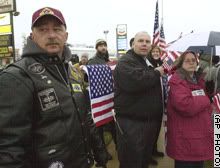
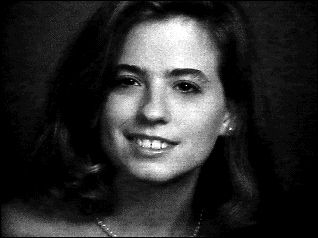
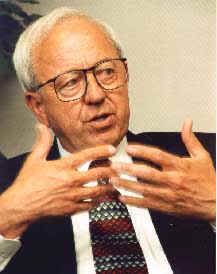
 Like many a father, Bud Welch was embarrassingly proud of his 23-year-old daughter, Julie. Bright, multilingual, ambitious, generous, dedicated, giving, quick-witted, and beautiful, Julie Welch had a plan. She wanted to use her degree in Spanish from Marquette University in Milwaukee to become an interpreter at the Social Security Administration back in her hometown of Oklahoma City. She wanted to make it easier for the Spanish-speaking to navigate the red-tape of governmental agencies that make it difficult, even for those of us who speak English. She was preparing to become engaged to her long-time love, a young lieutenant at Tinker Air Force Base.
Julie Welch knew how things should be. Working within the labyrinthine Social Security Administration proved challenging for her, and when confronted with a stifling bit of bureaucracy that seemed momentarily insurmountable, she would whisper to her co-workers, "That's just not the way it should be." But Julie never wavered from her belief that, to change the system, you had to do it from the inside out. To help the people who needed help the most, you had to put your head down, and soldier onward, knowing that if you could change one mind at a time, things would eventually get better.
On a Wednesday morning in the Spring of 1995, Julie Welch awoke with her entire life ahead of her. A job she loved, a man she adored who adored her in return, a loving relationship with her divorced parents, Julie Welch seemed untouchable. On April 19th, Julie, a devout Catholic, left her apartment and attended early mass at the Little Flowers Church, something she did frequently before work. She arrived at her first-floor office at the Social Security Administration office in downtown Oklahoma City, ready to take on the day with her usual tenacity and unbridled passion for what she knew was her calling.
Julie Welch's day came to an abrupt end at approximately 9:02 am on Wednesday, April
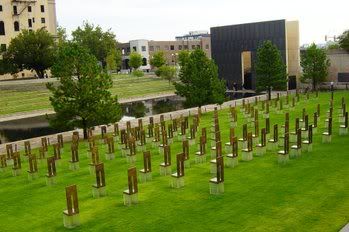
 19, 1995, when a rented truck packed with 5,000 pounds of home-made explosive devices detonated in front of the Alfred P. Murrah Federal Building, just outside the windows of the federally-run preschool. Seven miles away, Bud Welch was just in the process of getting out of bed. Every Wednesday, he and Julie met at a Greek restaurant for lunch across the street from the Murrah Building, and he was looking forward to seeing her, when the entire house suddenly shook with the sound of an enormous explosion. When he turned on his television, and realized exactly where the bomb had gone off, his entire life as he knew it became inexorably altered.
They would not find Julie Welch's body until Saturday, the 22nd, after four days of sifting through the rubble of the entire front face of the cracked-wide-open Murrah Building.
For the first couple of years after his daughter's murder, Bud Welch was a man filled with hatred -- hatred for Timothy McVeigh and his accomplices, hatred for the conspiracy theorists who persisted in implying that this was a black-ops CIA plot to try to gain permission to spy on US soil, to the government for the events that occurred at Waco, TX, resulting in the deaths of the Branch Davidians, which federal prosecutors insisted was the reason behind the attack in Oklahoma City. As Bud Welch tells it, he had enough anger to go around for everybody. Every day for a year after the bombing, he fed that hatred by returning to the site where she died. He drank to excess, smoked four packs a day, and dreamed of dark, terrible things he'd like to see happen to the bombers.
And then one day, the realization hit him like 10,000 volts. As a lifelong detractor of capital punishment (as was his daughter, Julie), if he stood by and watched as McVeigh and accomplice Terry Nichols were put to death, it would be propagating the same kind of revenge mentality that got Julie Welch killed in the first place. In that moment, it came to Bud Welch that he had a means for going forward without his daughter -- by picking up the banner of her loving heart and her social conscience, and moving on with it.
Bud Welch stopped drinking. He stopped smoking four packs a day. He stopped traveling to the place his daughter died and began to live in the memory of where -- and how -- she had lived. He began to speak out in favor of sparing the lives of McVeigh and Nichols. This made him anything but popular with other survivors who'd lost loved ones at the Murrah Building. He got death threats, hate mail, and was openly confronted with shouting and screaming when he attended the trials. Tempted to strike back, Bud kept the memory of his daughter close at hand, and made efforts to talk, gently and calmly about why he felt that his position deserved to be heard amongst the calls for vengeance.
Almost everyone who confronted Bud Welch was forced, through his straightforward, non-confrontational approach, to at least hear him out. Most never changed their minds. Some stopped openly calling for the death penalty. One, a woman who lost two grandchildren in the bombing, not only stopped screaming obscenities at Welch when she saw him, but actually began greeting him with a hug, and eventually -- even to Welch's astonishment -- began to correspond with Nichols in prison.
Welch's philosophy is a simple one. Execution not only does not bring closure, it actively prevents it. Welch believes that the ability to confront the monster who killed one you love is critical to the healing process. He tried to meet with McVeigh, but was rebuffed by the convicted bomber, who was eventually executed at his own request by lethal injection on June 11, 2001. He also testified in the penalty phase against executing McVeigh accomplice Nichols. It helped him go on, he says.
"God didn't make us so that we somehow get a feel-good out of taking someone else's life," he said. "It isn't part of the healing process."
And healing is what Bud Welch has done. With a vengeance, you might say. His new focus in life is to end the death penalty by changing one mind at a time, if needs be. Polling company Zogby International says that that might be a daunting task, but not as impossible as it appears on its face. Already, Zogby polls are showing that fewer and fewer Americans support the death penalty. Particularly among Welch's own demographic -- middle-class Catholics -- support for the death penalty has fallen in the last ten years from nearly 70% to a mere 48%.
 Welch makes public appearances all over the country, speaking about his journey to healing. This Saturday, March 4th, he flies to Seattle, Washington, where the organization Abolish the Death Penalty will welcome him as the keynote speaker at their 2006 Annual Abolish Dinner & Auction.
There, Bud Welch will no doubt take the podium, and, like many a proud father, will tell the story of his daughter, Julie -- of her life, her death, of the agony of losing one's only child, and of his struggle to find a reason and a means to go on without her. This brave act, among so many brave acts, makes Bud Welch one of the best, most righteous people I have ever heard about. I hope that someday, I can be fortunate enough to hear him speak in person. But if I never do, I feel today that I know him, knew his daughter, and can find the place in myself that can forgive without vengeance.